
Individualized Feline Vaccinations: A Deeper Approach to Immunology
Your cat deserves real protection against preventable diseases. At Columbia Pike Animal Hospital and Emergency Center in Annandale, VA, we build a tailored vaccination plan based on your cat's age, lifestyle, and health history. Dr. Kirchhart and our veterinary team follow the American Association of Feline Practitioners (AAFP) guidelines, updated in 2020, to make sure every recommendation is current and evidence-based.
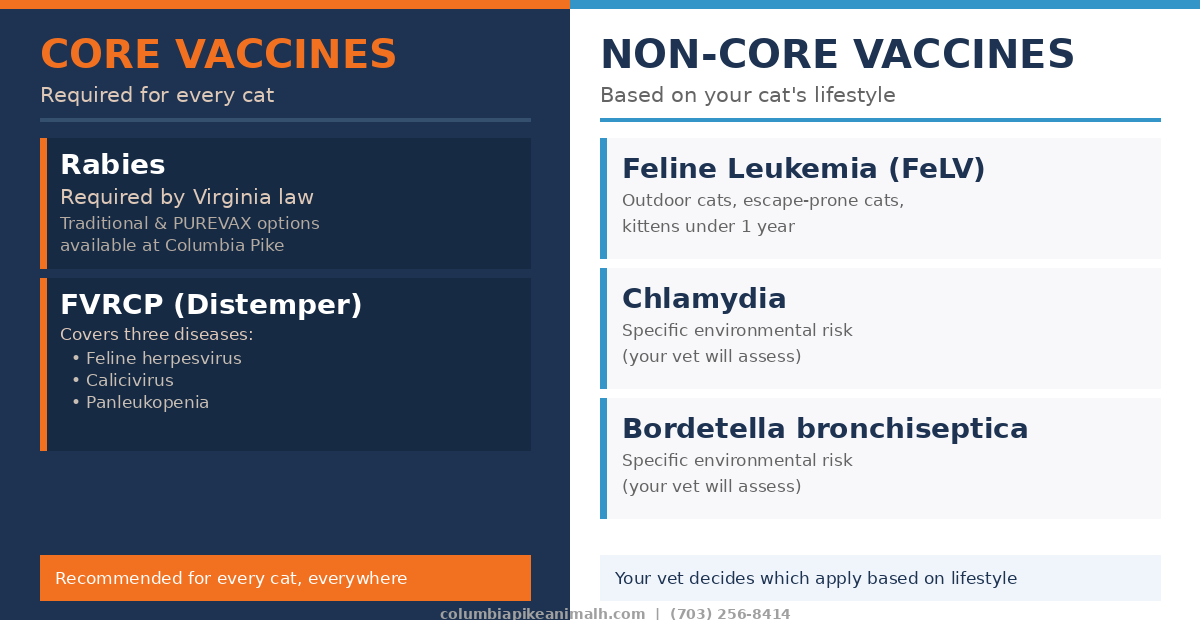
Core Vaccines: Required for All Cats
Every cat needs these, regardless of whether they live indoors or go outside.
Rabies
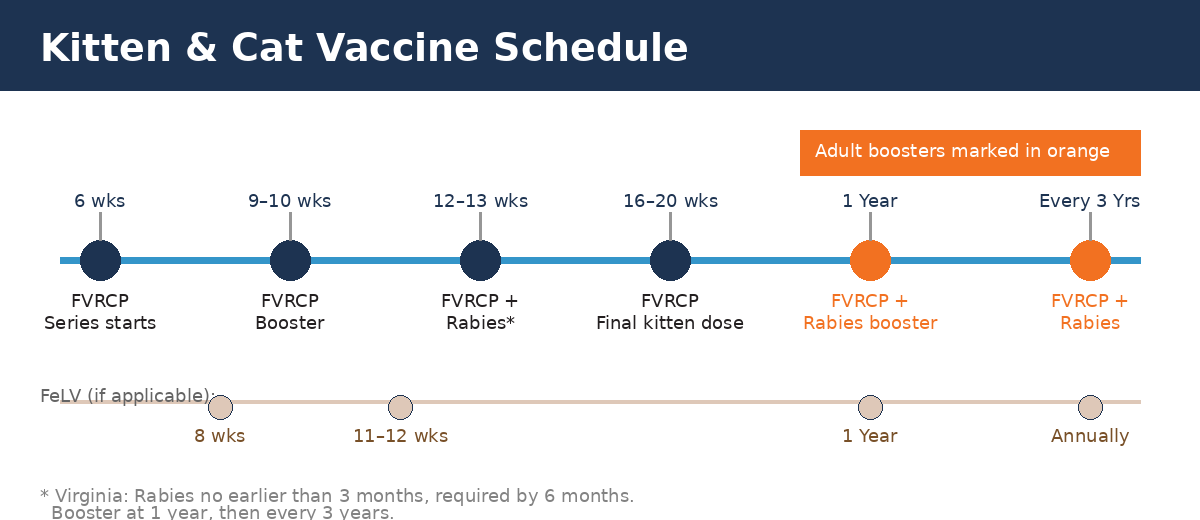
Required by Virginia state law. The first dose is given no earlier than 3 months of age, and your cat should have it by 6 months. A booster is due one year later, then every three years. We offer both the traditional rabies vaccine and PUREVAX, a non-adjuvanted option.
Feline Distemper (FVRCP)
This combination vaccine covers three diseases: feline herpesvirus, calicivirus, and panleukopenia. Kittens start their series as early as 6 weeks of age. They receive a booster every 3 to 4 weeks until they reach 16 to 20 weeks of age. One more booster follows at one year, then it is every three years after that.
Non-Core Vaccines: Based on Lifestyle
Non-core vaccines are optional. Your vet will recommend them based on your cat's specific environment and risk factors.
Feline Leukemia Virus (FeLV)
This is the most commonly recommended non-core vaccine. We recommend it for:
- Cats that go outside, even occasionally
- Cats with a history of escaping the house
- Kittens and cats under one year of age
Adult cats that live 100% indoors are generally considered low risk and typically do not need this vaccine. If you do start the FeLV series, the first dose can be given as early as 8 weeks, with a booster 3 to 4 weeks later, another booster at one year, and then annually after that.
Chlamydia and Bordetella bronchiseptica
These are the two other non-core options for cats. They are given based on specific environmental circumstances, for example multi-cat households or boarding situations. Your vet will discuss whether they apply to your cat.
What Your Annual Exam Covers
Vaccines are one part of a broader conversation at your annual wellness visit. During that appointment, we discuss:
- Which vaccines your cat needs and why
- Your cat's risk factors and lifestyle
- How often to vaccinate going forward
- Preventive medications, if needed
- Annual lab work to catch anything early
Most healthy cats and kittens can receive up to three vaccines in a single visit. The exception is cats with a history of vaccine reactions or adverse events. Your vet will adjust accordingly.
Vaccines for Senior Cats
Older cats still need vaccines. For healthy senior cats without significant underlying conditions, we continue to recommend core vaccines. If your senior cat goes outside, we continue the FeLV vaccine as well.
Here is why this matters: senior cats' immune systems are not as strong as they once were. That can actually make vaccination more important as cats age, not less. Your vet will assess your senior cat's overall health and make individualized recommendations at each visit.
Preparing Your Cat for Their Visit
You can reduce your cat's stress before they ever walk through the door.
At home:
- Put a favorite toy, a small amount of catnip, or a familiar treat in their carrier before the trip
- Place a towel or blanket that smells like home in the carrier
- Consider spraying Feliway (a calming feline pheromone product) inside the carrier or on the towel before you leave
When you arrive at Columbia Pike:
- We have separate cat and dog waiting areas. The cat side is notably quieter.
- If your cat is extremely anxious and difficult to transport, call us ahead of your appointment. We can discuss oral calming medication to give at home before the visit. It makes a real difference.
Frequently Asked Questions
Which vaccines does my cat need?
All cats need two core vaccines: rabies (required by Virginia law) and the FVRCP combination, which covers feline herpesvirus, calicivirus, and panleukopenia. Whether your cat needs non-core vaccines, like feline leukemia, depends on their age, lifestyle, and whether they spend any time outdoors. We will help you figure out what is right for your cat.
When should my kitten start vaccines?
The distemper (FVRCP) series can start as early as 6 weeks of age. Kittens get a booster every 3 to 4 weeks until they are 16 to 20 weeks old, then one more at one year. Rabies can be given starting at 3 months. Virginia requires it by 6 months.
Does my indoor cat need the feline leukemia vaccine?
Probably not, if your cat is a healthy adult and truly stays inside 100% of the time. But kittens and cats under one year do generally receive it, since their immune systems are still developing. If your cat ever escapes or spends any time outside, we will talk about adding FeLV protection.
How often do cats need vaccines after they are fully vaccinated?
After the initial kitten series and one-year boosters, the rabies and FVRCP vaccines are typically given every three years in healthy adult cats. Feline leukemia is recommended annually for cats that go outside.
Can my cat get multiple vaccines at one visit?
Yes. Most healthy cats can receive up to three vaccines at a single appointment. If your cat has had a previous reaction to a vaccine, we will adjust the plan to keep them safe.
What are the side effects of cat vaccines?
Mild soreness at the injection site and temporary lethargy are the most common reactions, and they usually resolve within a day or two. Serious reactions are rare. If you notice facial swelling, vomiting, difficulty breathing, or your cat seems to collapse after a vaccine, contact us immediately.
What if my cat has a reaction after hours?
We are open 24/7 with no additional emergency fee. Bring your cat in any time, day or night, and our team will take care of them right away.
Do senior cats still need vaccines?
Yes. Healthy senior cats should continue receiving core vaccines. If they go outside, we continue the feline leukemia vaccine as well. Senior cats can be more vulnerable because their immune systems are not as robust, which is actually a reason to stay current on vaccinations.
How do I know if my cat needs a vaccine update?
Bring them in for their annual wellness exam. We will pull their history, review what is due, and talk through any changes in their lifestyle or risk factors. If you are not sure when they were last vaccinated, call us at (703) 256-8414 and we can look it up.
Schedule Your Cat's Vaccinations Today
Protect your cat from serious illness. Call (703) 256-8414 or book online at columbiapikeanimalh.com.